How to Find a Reliable Used Car in Springfield, Ohio
Buying a used car can feel like a gamble, but with the right approach you can tilt the odds in your favor. For shoppers in Springfield, Ohio, the local market offers plenty of options, from private sellers to dealerships near Dayton. The key is knowing what to look for at each stage, so you drive away with a vehicle that fits your budget and your life.
Step 1: Set a Realistic Budget
Before you browse any listings, decide how much you can spend. This isn't just the purchase price. Factor in sales tax, registration fees, and the cost of a new license plate in Clark County. Also set aside money for an independent inspection and any immediate repairs. A good rule is to leave yourself a cushion of a few hundred dollars after the sale. That way, you are not forced to skip a professional check because your wallet is empty.
When you calculate your monthly payment, remember that a longer loan means lower payments but more interest over time. Aim for a term that keeps the total cost reasonable. If you are paying cash, you have more negotiating room. Either way, a firm budget helps you ignore cars that are too expensive or too cheap to be trustworthy.
Step 2: Know What You Need
Think about your daily driving. Do you mostly commute on local roads in Springfield or drive longer distances on highways? Do you need space for a family, or is a compact car enough for solo trips? Write down your must-haves: reliable fuel economy, a certain number of doors, a specific model year range, or safety features like airbags and anti-lock brakes. Then list your nice-to-haves, such as a backup camera or Bluetooth audio. This list will keep you focused when you see a shiny deal that doesn't actually fit your life.
Step 3: Search Smart
Start your search online, but be strategic. Use websites that let you filter by location, price, make, model, and year. Set your radius to include Springfield, Fairborn, Beavercreek, and the broader Dayton area. That keeps the search manageable while giving you enough inventory. Look for cars that have been listed for a while; sellers may be more willing to negotiate. Also note any car that has been relisted multiple times, which can signal a problem.
Private sellers often list on classifieds and social media marketplaces. Dealerships, on the other hand, typically provide a limited warranty and a cleaner history report. One local option worth considering is Jeff Schmitt Auto Group, which serves Springfield shoppers from its dealerships in Fairborn and Beavercreek. It is one of several places you can visit to see a range of used cars in person.
Step 4: Check the Vehicle History
Once you find a promising car, get the vehicle identification number (VIN) and run a history report. Services like Carfax or AutoCheck can reveal past accidents, flood damage, odometer rollbacks, and the number of previous owners. A clean history is a good sign, but do not rely on it alone. Even a perfect report does not guarantee that the car runs well. Use the history as a starting point, not a final verdict.

If the seller refuses to share the VIN or the report, walk away. That is a red flag. Also be wary of cars with gaps in the service records or a history of major collisions. A car that has been in a serious crash may have hidden structural damage.
Step 5: Inspect the Car Yourself
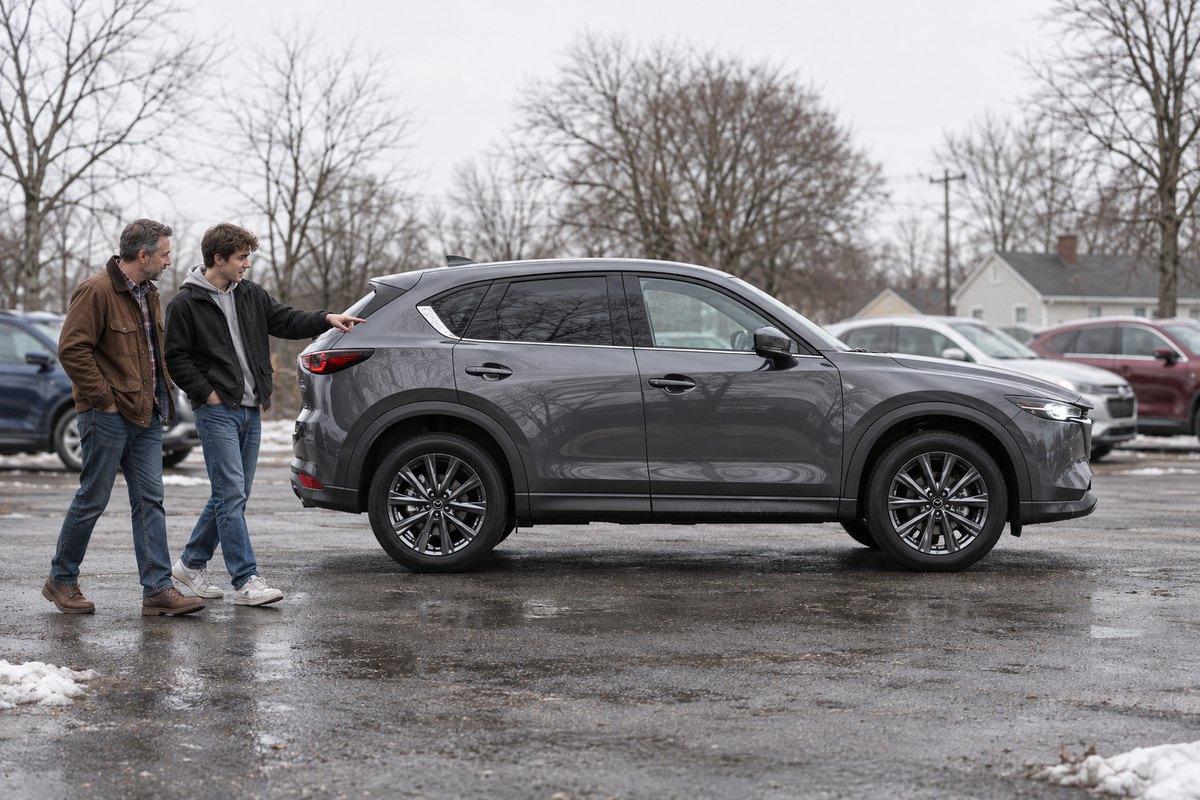
Before you pay for an expert inspection, do your own walkaround. Look at the car in daylight, on a dry day, so you can spot problems. Check the body panels for uneven gaps, mismatched paint, or rust. Open and close every door, the trunk, and the hood. They should all latch smoothly. Press down on each corner of the car. It should bounce once and settle. If it keeps bouncing, the shocks may be worn.
Inside the car, sit in the driver's seat. Adjust the mirrors, the seat, and the steering wheel to your comfort. Check that all the lights, wipers, turn signals, and the horn work. Turn on the air conditioning and the heater. Let them run for a few minutes to see if they blow cool or warm air as expected. Look at the odometer to confirm the mileage matches the history report.
Under the hood, look for leaks around the engine and transmission. Check the oil on the dipstick. It should be brownish and at the right level, not black and sludgy. The coolant should look clean, not rusty. Examine the battery terminals for corrosion. If the car has a timing belt, ask when it was last replaced. A worn belt can snap and cause major engine damage.
Step 6: Take a Test Drive
A test drive is your chance to feel how the car handles. Drive on a mix of streets: a straight road, a curve, and a bumpy section. Listen for unusual noises like squeaks, rattles, or grinding. Notice how the car accelerates and brakes. The steering should feel responsive, not loose. On a straight stretch, let go of the wheel briefly. If the car drifts to one side, the alignment or tires may be off.
Try the brakes at moderate speed. They should stop the car smoothly without a wobble or a soft pedal. If the pedal goes all the way to the floor before braking, there may be air in the lines or worn pads. Also test the parking brake. Drive up a slight incline, set the brake, and see if the car stays put. Any failure here is a safety issue.
Step 7: Get a Professional Inspection
Even if the car seems perfect, pay for a pre-purchase inspection by a mechanic you trust. A good mechanic will check the engine, transmission, suspension, brakes, tires, and the undercarriage for rust or damage. They can also run a diagnostic scan to find hidden electronic faults. The inspection typically costs between one hundred and two hundred dollars, a small price for peace of mind. If the seller will not let you take the car to a mechanic, that is a major red flag. Do not buy it.
Ask the mechanic to estimate the remaining life of major components like the tires, battery, and belts. That information helps you plan future maintenance. If the inspection reveals a serious issue, you can either negotiate a lower price or walk away. A clean inspection report also gives you confidence when you negotiate.
Step 8: Negotiate the Price
Once you have the inspection results and the history report, you have a strong position. Know the fair market value of the car by comparing similar listings in the Springfield and Dayton areas. Use websites like Kelley Blue Book or Edmunds to get a range. Then make an offer that accounts for any needed repairs or deferred maintenance. Be polite but firm. If the seller counters, stay within your budget. Remember that the goal is a fair deal, not a steal.
If you are buying from a dealership, they may offer a warranty or a return policy. Read the fine print. Some warranties only cover certain parts or require you to use their service center. A reputable dealership like Jeff Schmitt Auto Group provides a straightforward buying experience, but always ask about what is included and what is not.
Step 9: Handle the Paperwork
When you agree on a price, the paperwork begins. In Ohio, the seller must provide a signed title that is free of liens. Check that the title matches the VIN on the car. If there is a lien, the seller must pay it off before you can take ownership. You also need a bill of sale that lists the date, the purchase price, both parties' names and addresses, and the vehicle description. Both of you should sign it.
Next, you need to register the car in your name. Take the signed title, the bill of sale, and proof of insurance to the Ohio Bureau of Motor Vehicles or a local deputy registrar in Clark County. They will issue a new registration and license plates. You also need to pay the registration fee and any applicable taxes. Keep the registration and insurance card in the car at all times.
Step 10: Plan for Maintenance
Owning a used car means staying on top of routine care. Change the oil every three thousand to five thousand miles, or as the manual recommends. Replace the air filter, the cabin filter, and the spark plugs according to the schedule. Keep an eye on tire pressure and tread depth. Rotate the tires every six months or so. If any warning lights come on, investigate promptly. Small problems become expensive ones if ignored.
Also find a mechanic you trust in Springfield. Ask friends or look for shops with good reviews. A reliable mechanic can help you catch issues early and keep your car safe and dependable. With regular maintenance, a well-chosen used car can serve you for many years.
By following these steps, you can navigate the used car market in Springfield, Ohio with confidence. Take your time, do your research, and never skip the inspection. A careful process now means fewer surprises later.
Ends · THECARDEALERSHIPSOURCE